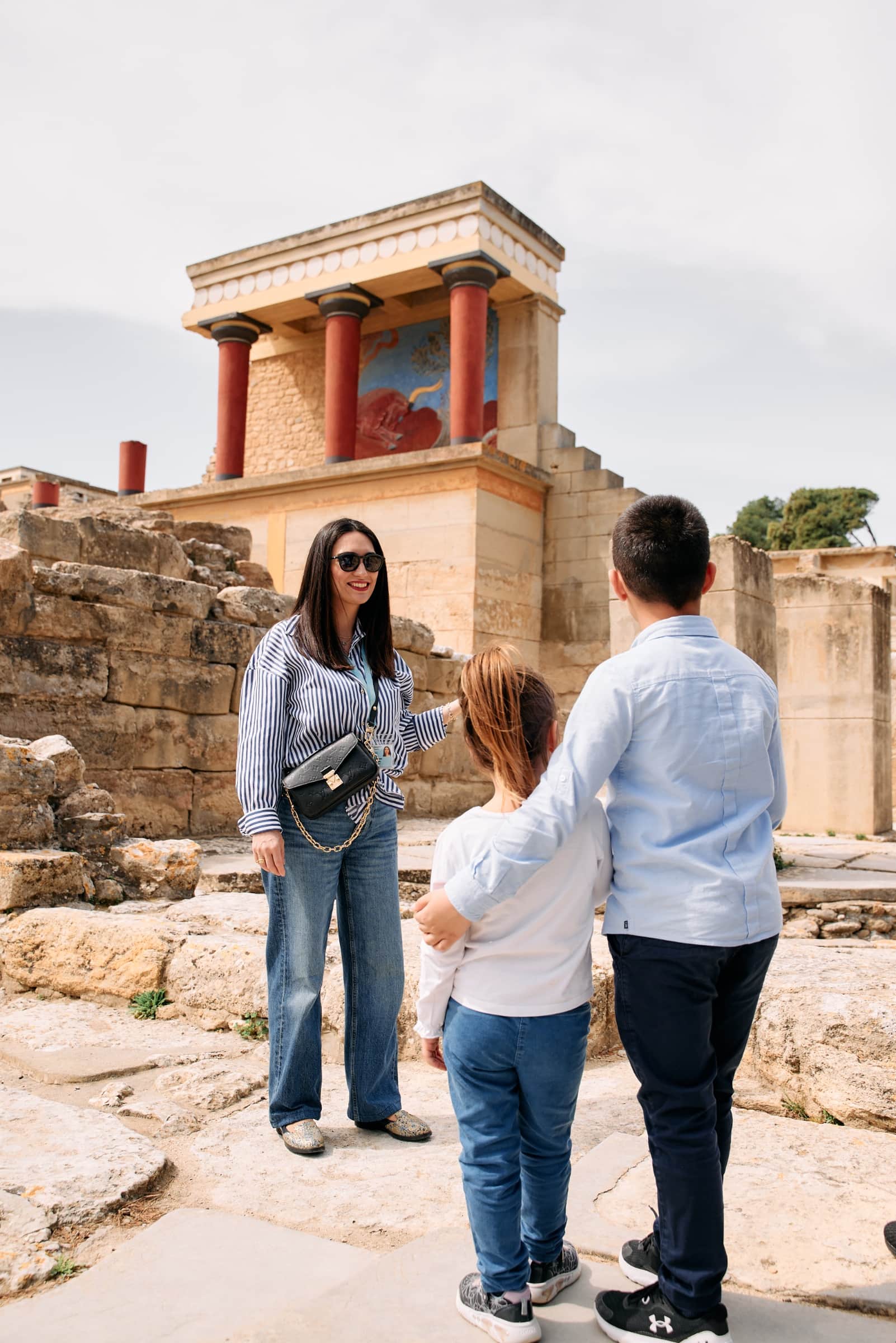
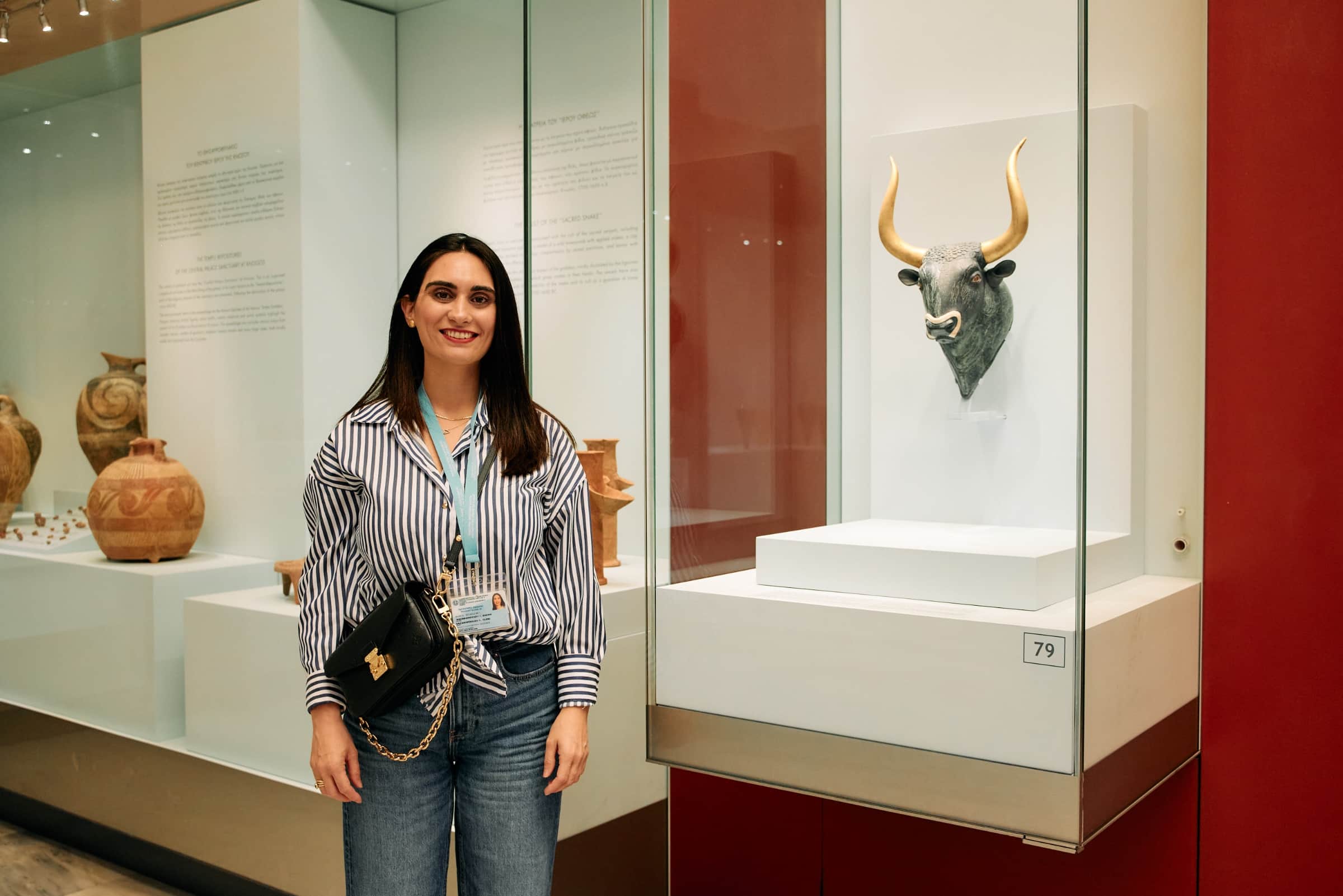
Heraklion gets dismissed fast, usually by people who saw the ring road and the airport queue and nothing else. Fair enough: the seafront is a working port and the concrete is not shy. But inside the Venetian walls there is a proper Greek city that performs for nobody. The Archaeological Museum on Xanthoudidou Street holds most of what the Minoans left behind, the covered market on 1866 Street still sells graviera and mountain herbs to actual residents, and the Koules fortress has been squatting at the harbour mouth since 1540.
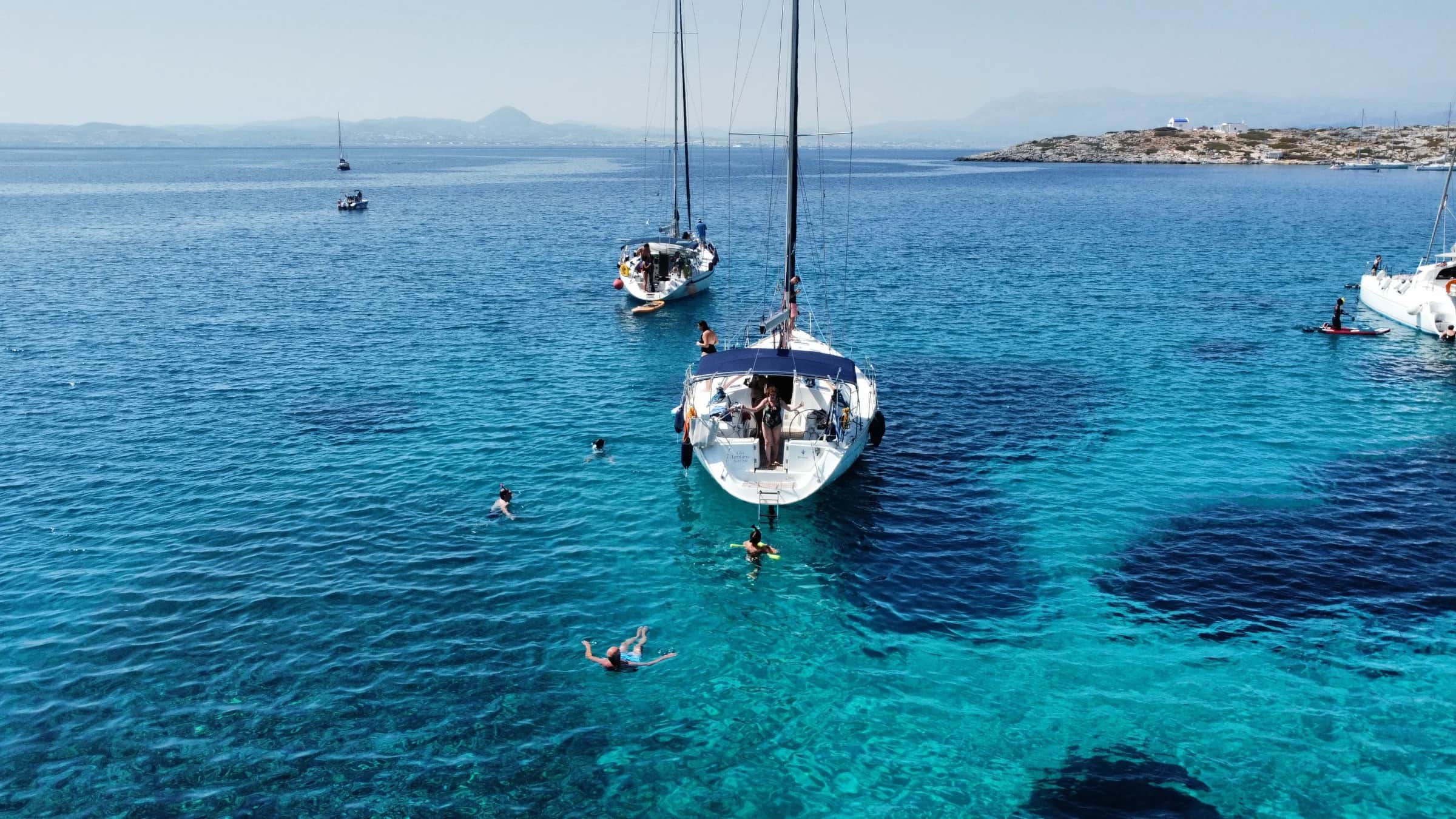
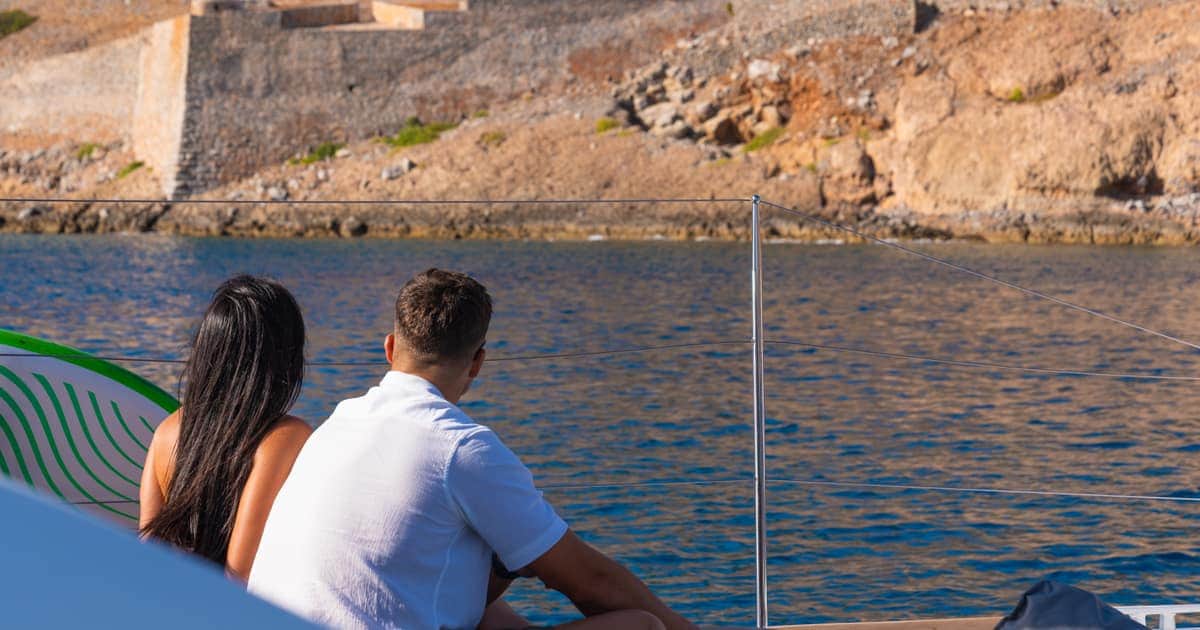
The region is more useful than the capital's reputation suggests. Knossos sits about 5 km from the centre, close enough that the number 2 city bus does the run in about 20 minutes. Twenty minutes further south you are in wine country — Archanes and the Peza valley under Mount Juktas — and an hour beyond that, over the island's spine, the road drops to Matala, where carved caves look out over the Libyan Sea. Offshore, the uninhabited hump of Dia island sits 7 nautical miles out, and sailing there is the best lazy day the north coast offers.
Base here for substance rather than romance — Chania does postcard harbours better, and knows it. What Heraklion offers is position. Fast ferries reach Santorini in about two hours, KTEL coaches run along the north coast roughly hourly, the airport is a short taxi from town, and Knossos costs a bus ticket. Add dinner in a centre where most tables around you are speaking Greek, plus cellar doors within 30 minutes pouring some of Greece's most interesting white wine, and the trade starts to look sensible.
Towns worth your time
Heraklion city
Start at the Morosini fountain on Lions Square — finished in 1628, fed by an aqueduct that carried water 15 km from Mount Juktas — and order bougatsa at Kirkor, run by the same Armenian family since 1922. Then walk the covered market on 1866 Street for graviera, thyme honey and bundles of dried herbs. The harbour end is less lovely: a busy road separates town from sea and the restaurants on the front are forgettable. Push through anyway for the Koules fortress and a walk along the Venetian mole. The Archaeological Museum needs two unhurried hours; go late afternoon, after the coach groups have gone.
Archanes
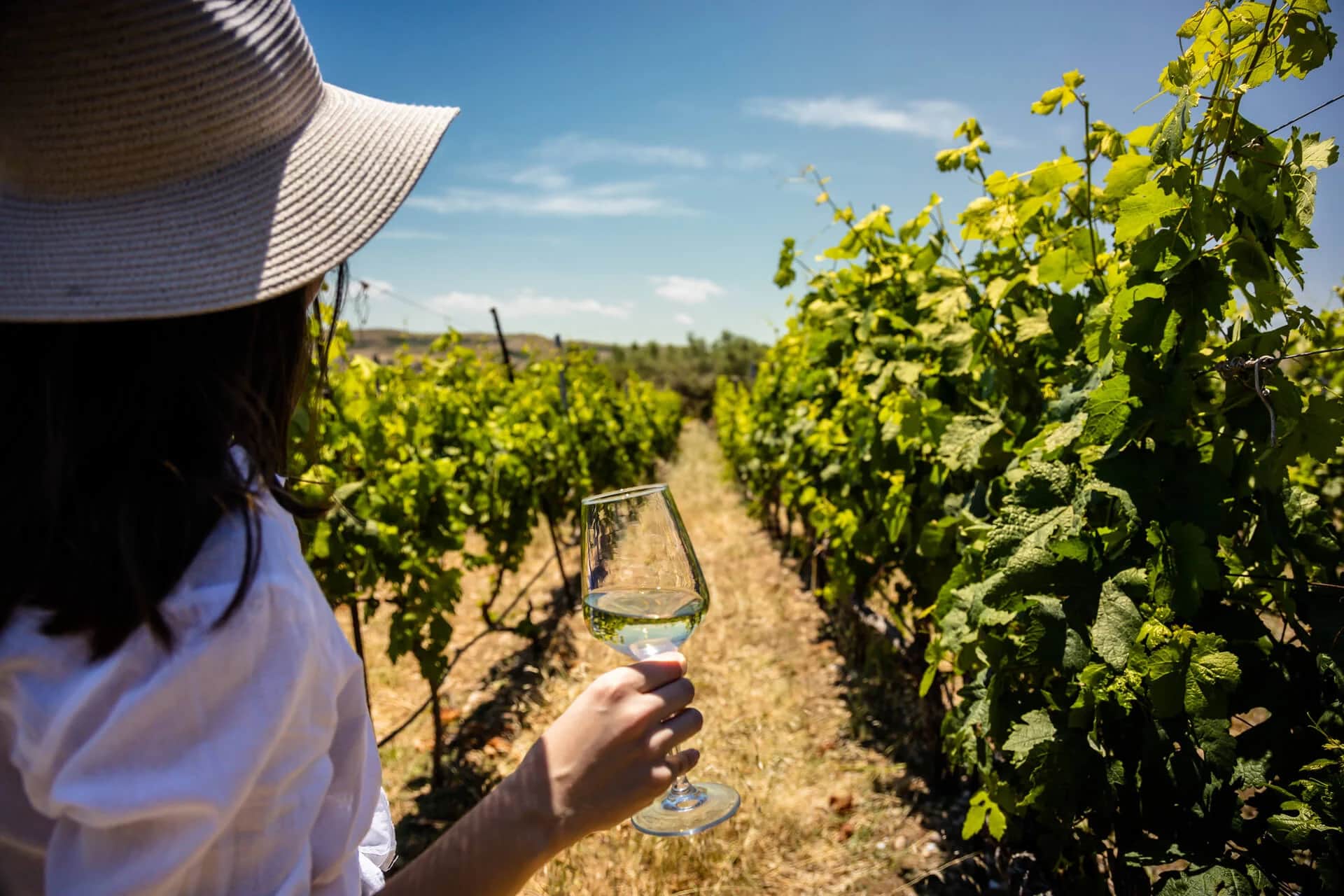
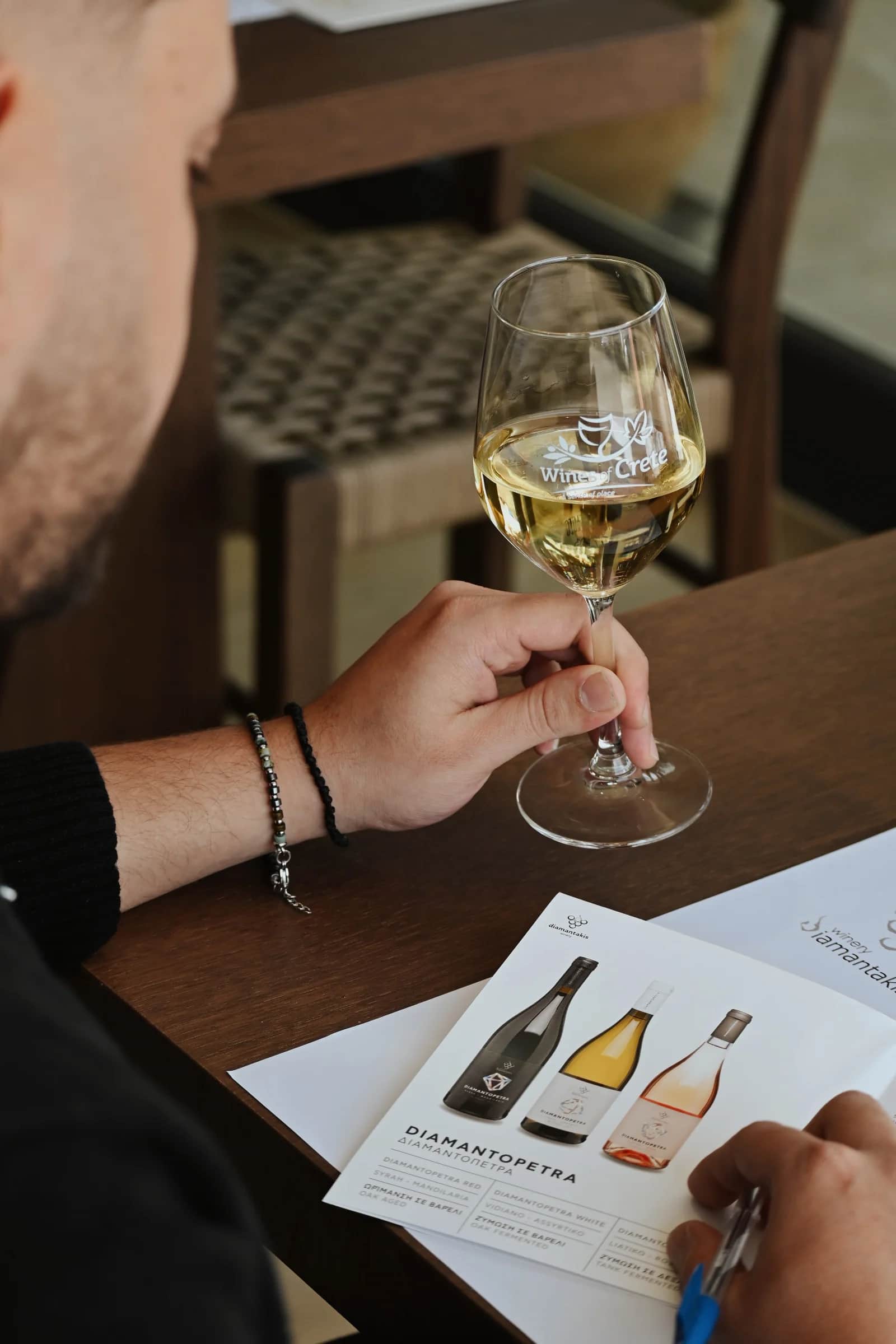
Twenty minutes of vines and olive groves south of the city, Archanes is what happens when agricultural money stays home: restored ochre and oxblood houses, a small square where the kafeneia fill by late morning, and Mount Juktas — 811 m, sacred to the Minoans — standing over the whole thing. This is the centre of Crete's most serious wine country; the Peza and Archanes zones grow kotsifali for the reds and, increasingly, vidiano for the whites, and several wineries within a short drive take visitors. Eat long, taste slowly, and do not expect anything to happen after dark, because it will not.
Matala
The drive south takes about an hour and a quarter, and Matala is still worth it, mostly. The caves cut into the sandstone cliff sheltered a hippie colony in the late 1960s — Joni Mitchell lived here and put it in 'Carey' — and the fenced site can still be climbed through. The village behind the bay trades hard on that decade: painted slogans, mermaid murals, tie-dye by the metre. Come in June or September, swim the bay early, walk over the headland to Red Beach if your knees are willing, and be gone before the tour coaches stack up towards midday.
Hersonissos & Malia
Be honest with yourself about the resort ribbon starting about 25 km east of Heraklion. Hersonissos and Malia are package territory: water parks, quad hire, full English breakfasts, and a bar strip in Malia that exists for British teenagers on a first passport. None of this is a secret. Two things survive the noise. Old Malia village, a few streets inland, keeps its whitewashed lanes and tavernas grilling for Greek families; and the Minoan palace of Malia, 3 km east of town, is a genuine Bronze Age site you can often walk nearly alone while the beach fills up.
The coast
Ammoudara
Heraklion's house beach: a long run of sand starting 4 km west of the centre, backed by a straggle of hotels, beach bars and the Gazi suburbs. It is not the Crete of the posters, but the sand is real, city buses go there, and the afternoon breeze keeps the windsurfers busy. Good for a swim tacked onto a museum day; not something to plan a holiday around.
Agia Pelagia
About 23 km west of the city, Agia Pelagia is a village stacked around a horseshoe cove that stays calm when the open coast is churned up. The water is deep and clean; the beach itself is narrow and vanishes under sunbeds by mid-morning in August. Go early, or come in the shoulder months when the coves on either side empty out.
Matala Bay & Red Beach
Matala's own bay is a fine swim — flat sand, the cave cliff on your right, tamarisks at the back. When it fills, walk: the trail over the southern headland reaches Red Beach in 30 to 40 minutes of loose rock and goat path, ending at a rust-coloured cove that is clothing-optional at the far end. Proper shoes and water; no flip-flops on the descent.
Kommos
A short drive north of Matala, Kommos is the better beach and the emptier one: a long stretch of sand backed by dunes and juniper, with the excavated remains of a Minoan harbour town at its southern end. Part of it is Crete's best-established naturist stretch, so pick your spot with intent. Shade is scarce and the tavernas are seasonal — carry what you need.