Motor Yacht or Sailing Yacht in Crete: How to Choose
Once you have decided to take a whole boat rather than a seat on someone else's, one question is left and almost nobody answers it honestly: engine or sail. The listings will not help much. They are written to sell the boat in front of you, so the motor yachts talk about speed and the sailing yachts talk about the sails, and neither tells you what the choice costs you in hours or in euros.
Here is the short version, and the rest of this page is the working. The engine buys you time — the Dia motor yacht in our catalogue describes the crossing as twenty minutes, where a sailing boat takes thirty to forty-five over the same water. The sail buys you more boat per euro, because measured per hour on the water it is the cheaper hull. If your afternoon is short and fixed, take the engine. If the passage is part of what you came for, take the sails.
Quick Summary
The private engine boats on our list from Heraklion are three motor yachts at €720, €800 and €900, each carrying up to eleven guests, each priced for the whole boat. The private sailing boats we sell over the same water start at €470 for four hours and run to €980 for a full day from 09:30 to 16:00. Both are whole-boat prices, so neither changes if you bring two people or ten.
Per hour of boat, sail wins comfortably — roughly €120 an hour for the smallest sailing charter against €200 to €270 an hour for the motor yachts. Per hour actually stopped somewhere, the engine closes most of that gap, because it spends less of your booking getting there. And below both of them sits a skippered speedboat at €120 for the first hour and €70 for each hour after, which is the cheapest way onto a private engine boat in the catalogue.
What the Engine Actually Buys
It buys crossing time, and almost nothing else that matters.
Dia sits about seven nautical miles off the north coast, and there is no ferry and no public boat to it — a chartered or shared trip is the only way across. On that run our motor yacht listing describes a fast twenty-minute crossing towards Agrilia Bay. A sailing boat covers the same water in thirty to forty-five minutes. On a three-hour booking that difference is not trivia: it is the difference between one swim stop and two.
What the engine does not buy is a better boat. None of the three motor yacht listings publishes an engine size, a top speed or a cruising range — the performance language is adjectival, and the single crossing time above is the only hard number any of them gives. One of them goes out of its way to say the trip is not a rushed transfer to the island, which is a fair way of admitting that speed is a means here, not the product.
Three Motor Yachts, and Why They Are One Boat
This is the part the listings will not tell you, because each one is selling itself.
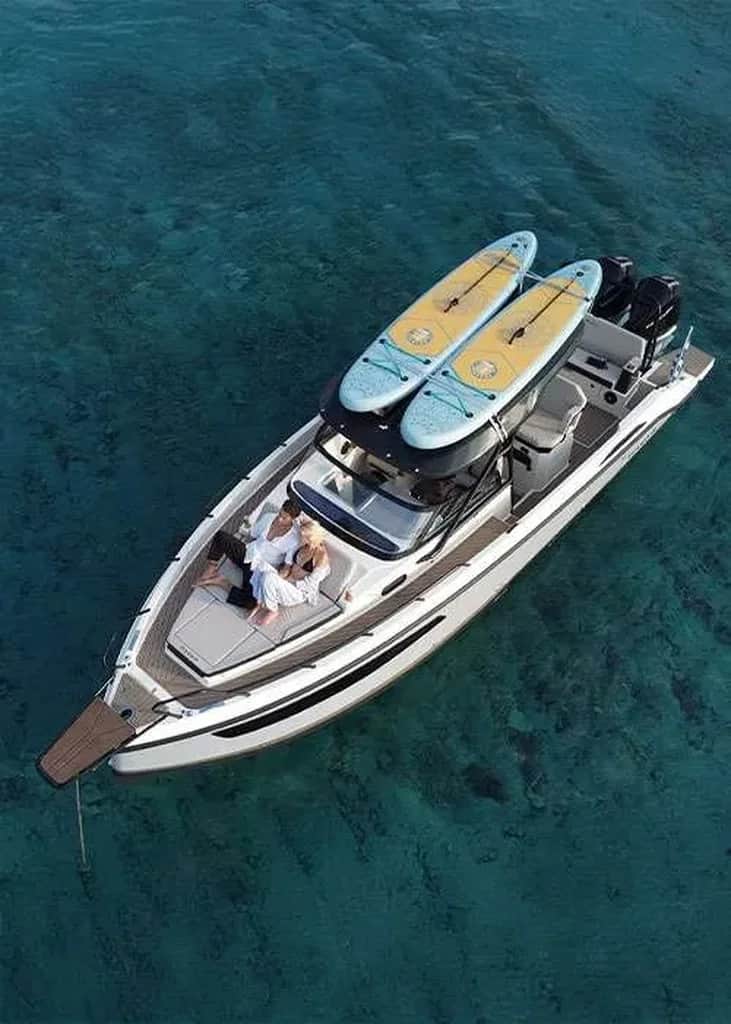
All three private motor yachts from Heraklion are the same class of hull — a Navan S30, leaving from Marina Rodias at Pantanassas, taking up to eleven guests. The price ladder is not a quality ladder. It is a map of where the boat goes and how long it stays:
- €720 — three hours, close to shore. Cliffs, sea caves and swim stops, with the route kept deliberately inshore so less of the booking is spent crossing open water. Departures at 09:30, 12:30 and 17:30, and the three hours are fixed.
- €800 — three hours, out to Dia. The same boat pointed at the island instead of the coastline.
- €900 — four and a half hours to Dia. The extra €100 over the three-hour version buys about ninety more minutes, and nearly all of it is time at anchor rather than under way.
Read that ladder before you assume the dearest one is the better boat. It is the same deck, the same eleven-guest ceiling and the same skipper. If the coastline appeals more than the island, the cheapest of the three is also the one built for it.
The Sailing Side of the Same Water
The private sailing boats to Dia start lower than any motor yacht we list. The smallest is an Elan 37 at €470 for four hours and up to eight guests, which is the least expensive private hull in the catalogue by some distance. At the other end, the full-day Bavaria 45 runs 09:30 to 16:00 for €980 and takes up to ten.
Set those against the engine boats and the arithmetic goes one way. About €120 an hour for the Elan 37, about €150 an hour for the full-day Bavaria, against roughly €240 an hour for the €720 motor yacht and €200 for the €900 one. A sailing yacht is simply more boat-hours for the money.
What you pay for that is pace. A sailing day is longer because it is meant to be — the crossing is part of the trip rather than an obstacle between you and a bay. If nobody in your group has any patience for that, the saving is not a saving.
The Cheapest Engine Boat Is Not a Motor Yacht
From the same Marina Rodias there is a skippered speedboat at €120, and it is sold by the hour: the first hour at that price, then €70 for each hour after it. Fuel is included, a skipper drives, and it takes up to five guests.
Three skippered hours on it comes to €260. That is a third of the shortest motor yacht trip, on a boat carrying five of the eleven. You lose the deck space, the cabin, the paddleboards and the platter of food — but if what you want is a couple of hours poking along the coast rather than a day out, this is the honest answer and the motor yacht is an expensive way to buy the same water.
Boats you can take on your own
 From €98
Heraklion, Crete · 4 hours
Semi Private Sailing Trip from Heraklion to Dia Island: All-Inclusive
Check availability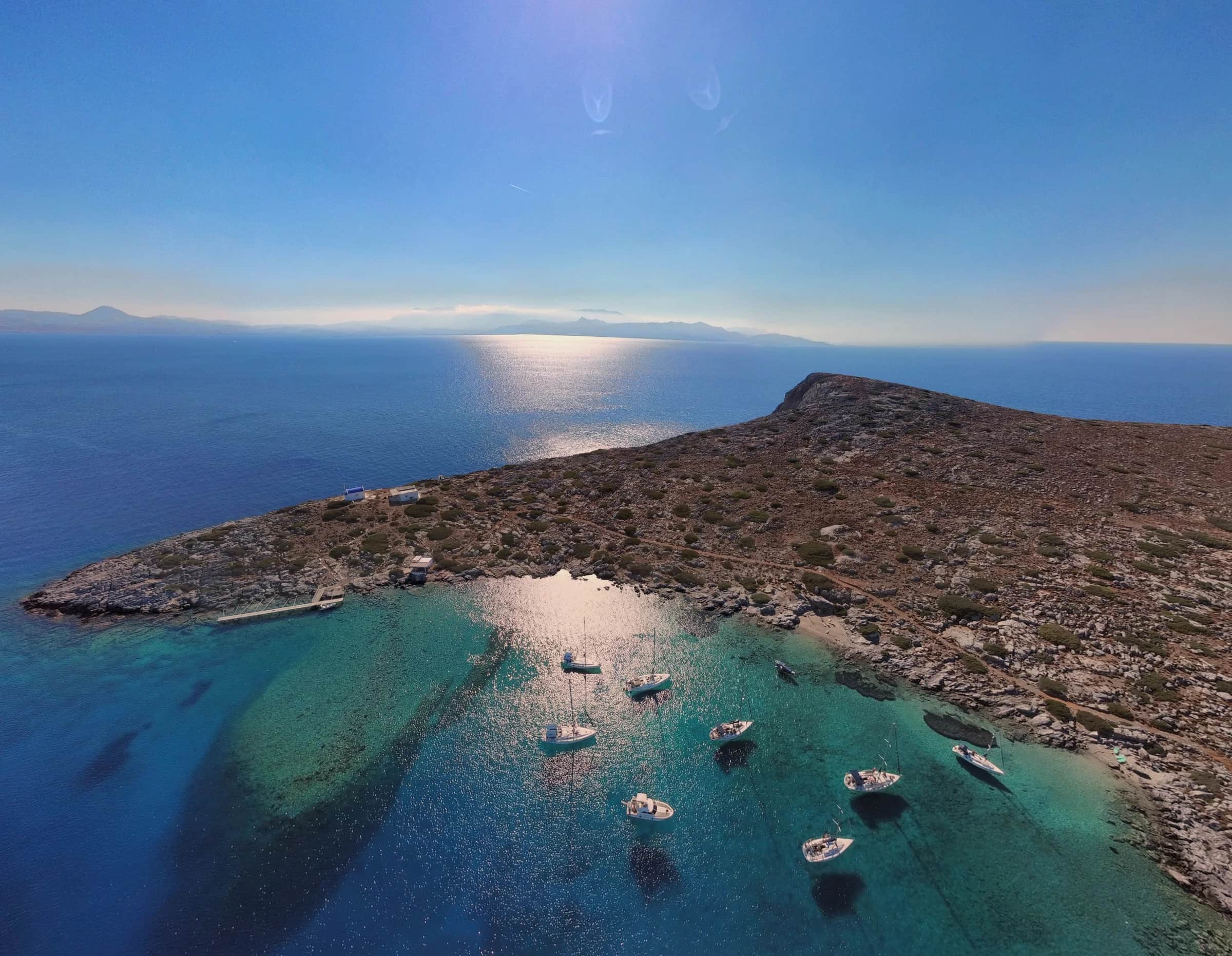 From €470
Heraklion, Crete · 4 hours
Heraklion to Dia Island, Authentic Private Sailing Experience with Elan 37
Check availability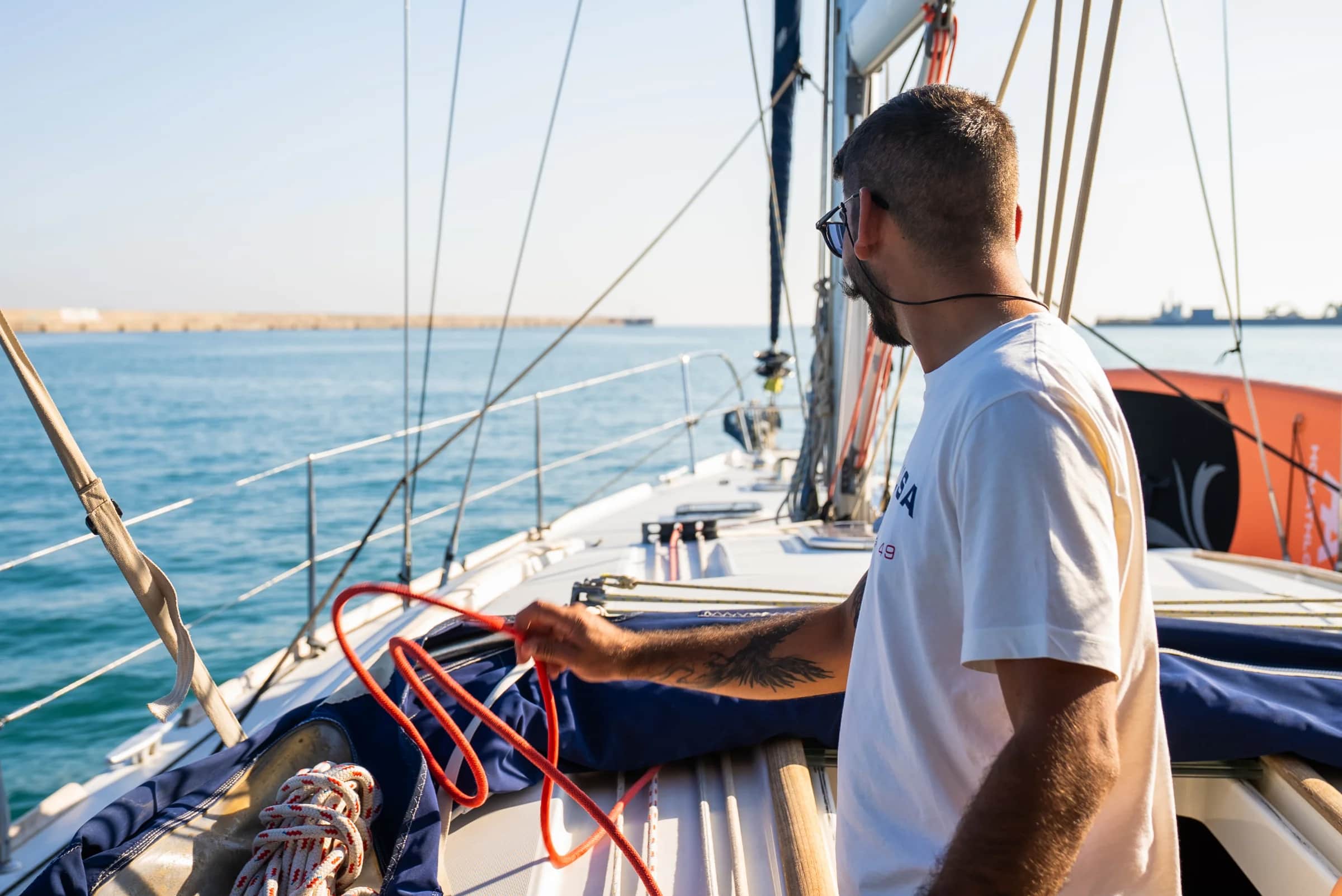 From €540
Heraklion, Crete · 5 hours
4.5 hours Private Sailing Trip from Heraklion to Dia Island: All-Inclusive
Check availability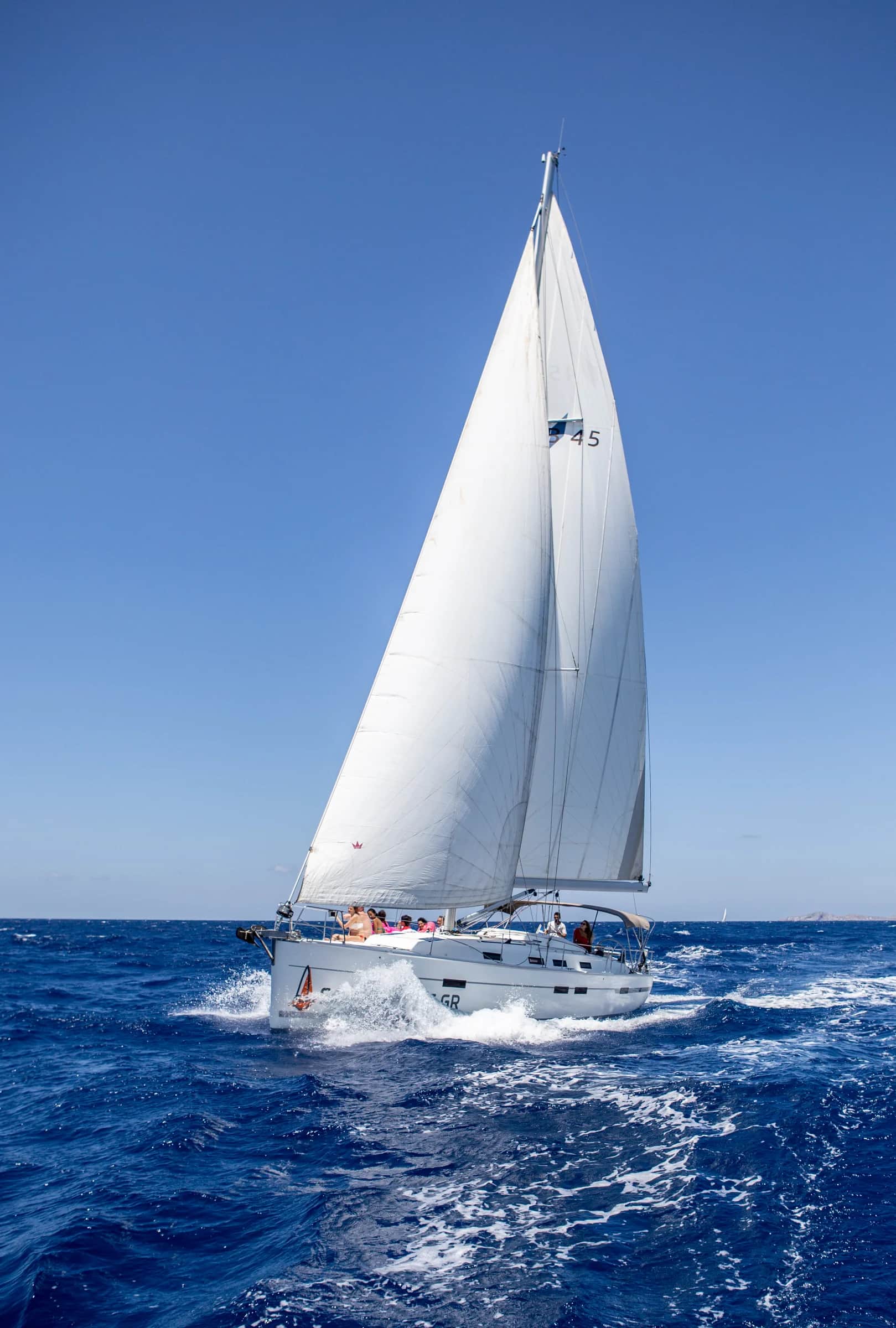 From €590
Heraklion, Crete · 4 hours
Heraklion to Dia Island, Authentic Private Sailing Experience with Bavaria 46
Check availabilitySea State and the Afternoon Wind
The north coast has a daily pattern worth booking around: mornings are usually the calmest, and the wind tends to build through the afternoon.
That pattern is where the engine earns its premium properly. A motor boat holds its plan in a rising breeze, needs no angle to the wind and can turn a short, fixed weather window into a usable trip. A sailing boat wants wind and time — give it both and it is the better day, give it neither and it motors anyway, which is the worst of both.
If anyone in your group is prone to seasickness, none of this is a preference. Take the morning slot, on either hull.
What Is On Board, and the One Thing That Is Not
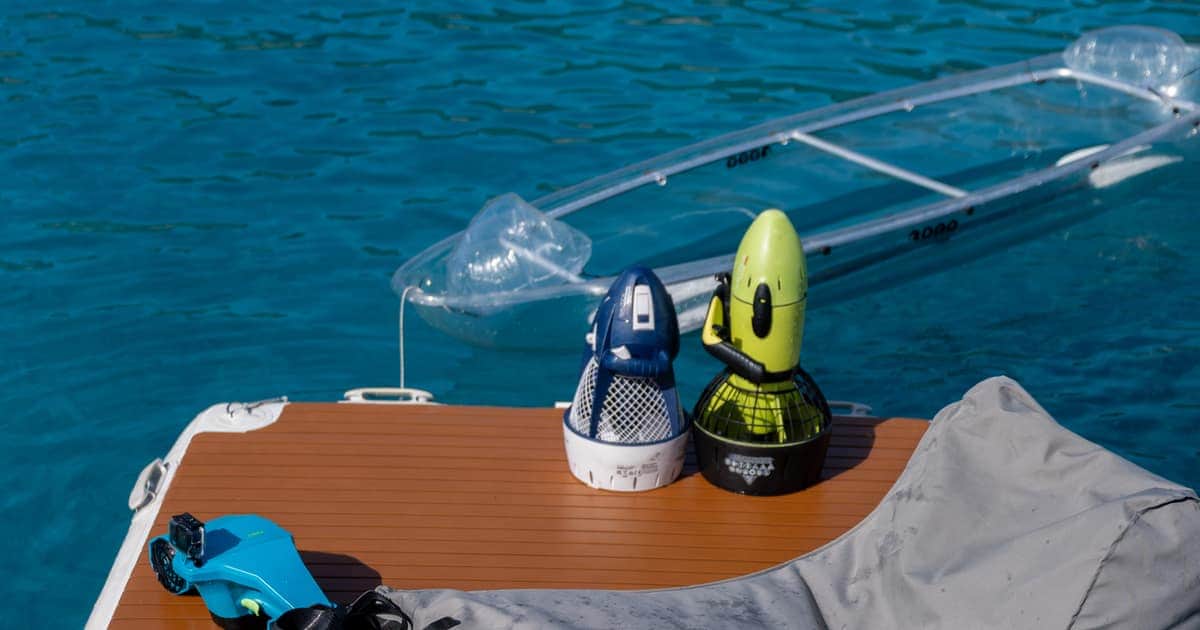
Both hull types arrive well stocked, and the differences are smaller than the prices suggest. The motor yachts we sell include the skipper, fuel and all operational costs, unlimited soft drinks, water, beer and local wine, snorkelling equipment and stand-up paddleboards; the shortest one adds a cold cuts and cheese platter, and the two Dia boats add premium snacks and the use of a sun deck, a shaded cockpit, a cabin with a WC and a freshwater shower.
Fuel is the fact worth carrying away: it is included on every skippered boat we list, engine or sail. It is not included on a licence-free boat you drive yourself — that is settled at the end on what you actually burn. The full picture of what a fare covers, and the three costs that sit outside it, is in our guide to what is included on a boat trip, and if you are weighing driving yourself instead, boating without a licence covers how far you can actually go.
Where Each Hull Falls Short
The motor yacht falls short on value for two people. €800 split two ways is €400 a head for three hours. The same island is reachable on a semi-private seat for a fraction of it, and the boat is not eleven times nicer than a shared one.
The sailing yacht falls short on a short afternoon. Four hours with a forty-minute crossing at each end leaves less water time than the numbers imply, and on a windless day you have paid for sails you will not use.
Both fall short if you have not read the guest ceiling. The number on a private listing is how many people the flat price is written for, and it is not always the number the boat holds — we set that out boat by boat in how many guests a private boat covers.
Weather and the Best Time
The boat season here runs April to October. June and September are the two months we would book if the choice were free — warm water, settled weather and marinas that are not at full stretch. July and August are the most reliable and the busiest. April and October are cooler and less predictable, and trips are more likely to be reshaped by the forecast.
Season affects the two hulls differently. In the shoulder months a sailing day is more exposed to a poor forecast, because a long crossing in a lumpy sea is a long time to be uncomfortable. A three-hour engine trip is easier to fit into a decent half-day when the week is unsettled.
How to Choose
Take the engine if your window is half a day or less, if you want to reach Dia and still have real time in the water, if there are eight or more of you making the flat price cheap per head, or if the forecast is unsettled and you need the trip to survive it.
Take the sail if you have a whole day, if you want the most boat-hours your money will buy, if the crossing itself is part of the appeal, or if you would rather be at anchor in a quiet cove than at anchor next to an idling engine.
Take neither if there are two of you and the budget is tight. A private hull is the wrong product at that size, and a shorter half-day trip from Heraklion or a semi-private seat will serve you better.
Common Mistakes to Avoid
Assuming the dearest motor yacht is the best one. All three are the same hull. You are buying a route and a duration.
Comparing a whole-boat price to a per-seat price. €900 for the boat and €70 for a seat are not numbers that belong in the same sentence until you have divided one of them.
Treating a self-drive rental price as comparable. It is missing the fuel, the skipper and usually a deposit. It is genuinely cheaper, but not by the gap the headlines suggest.
Booking the last departure and expecting a long evening. A three-hour charter is three hours from its stated departure. Arriving late shortens your trip, not the operator's.
Booking an afternoon crossing on a windy week. The morning slot exists for a reason on this coast.
Where to Stay
Every engine boat on this page except the Rethymno one leaves from Heraklion or the Lasithi coast, and the morning slots start early enough that a fifteen-minute arrival buffer is much easier from nearby. Marina Rodias at Pantanassas is a short drive from the city — and it is not the old Venetian harbour in the centre, so check the meeting point rather than assuming it.
We run our own villa company, My Creta Villa, so when we suggest a house rather than a hotel room we are recommending our own business and would rather say so. The properties sit across Heraklion and Lasithi, which covers the departures on this page.
Villas near the Heraklion departures
My Creta Villa is our own villa company — same family as this guide.
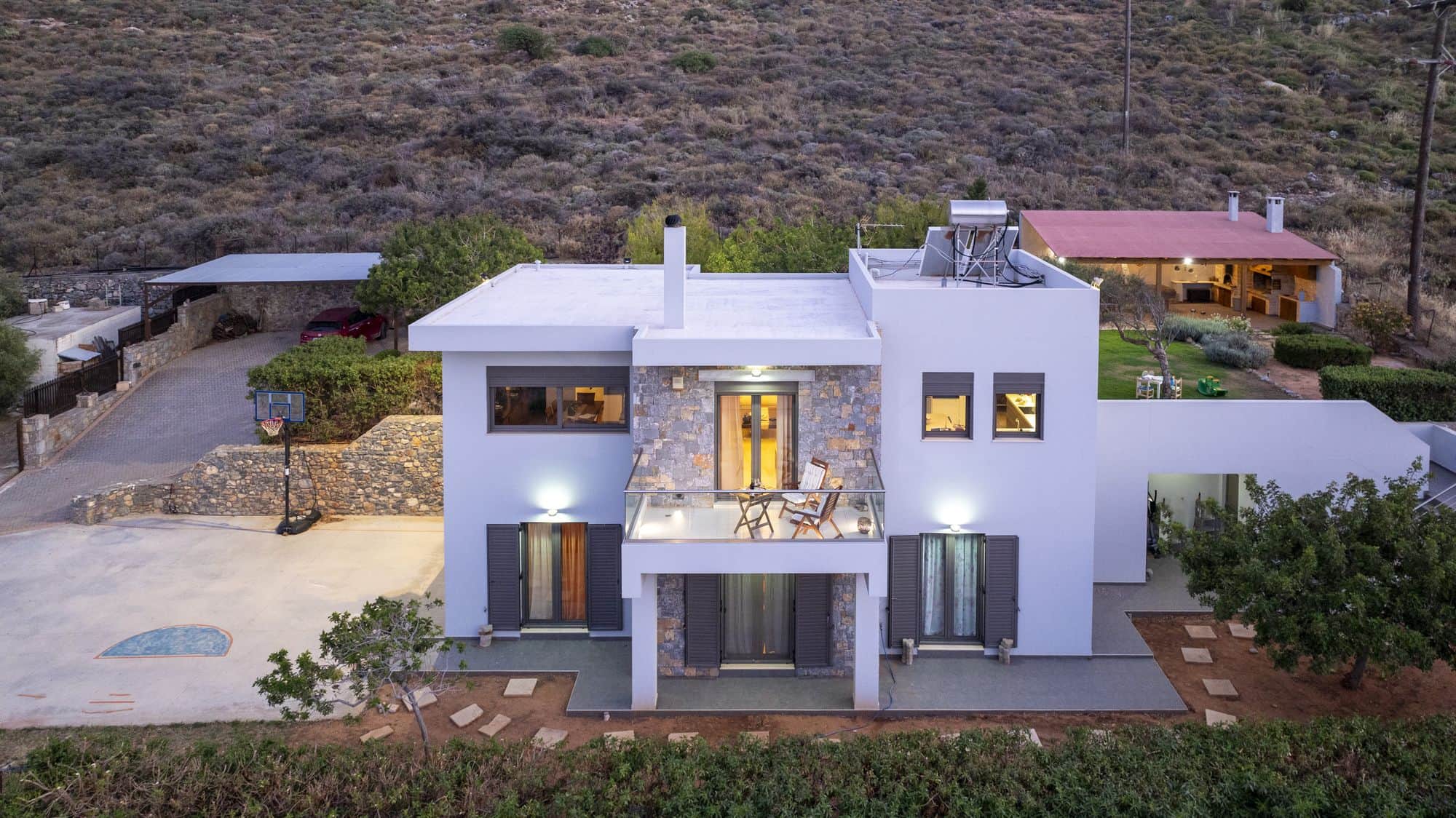 From €400
Heraklion
Luxury Villa Kopsas
8 guests · 4 bedrooms
View villa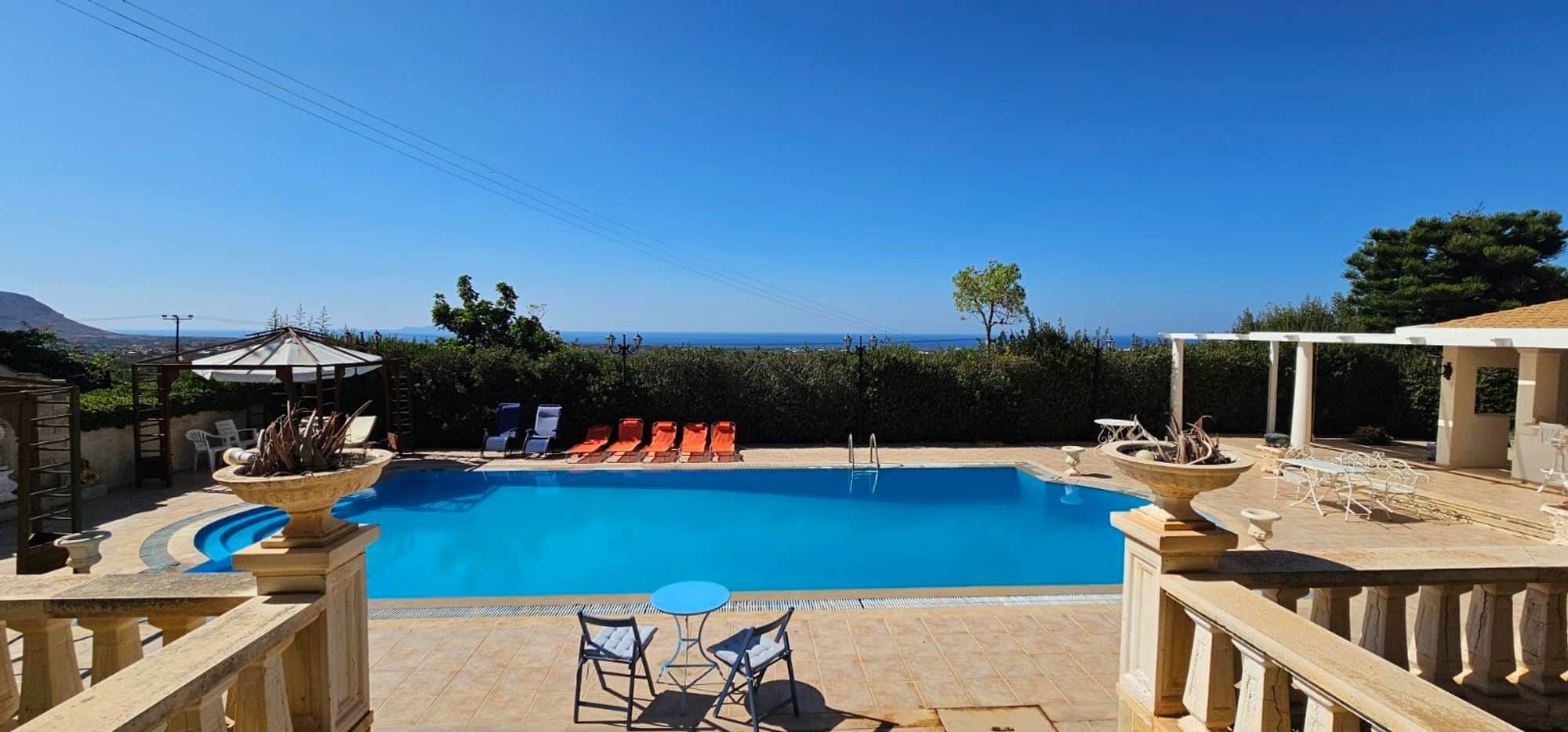 From €650
Heraklion
Palazzo Reale Superior Villa
13 guests · 7 bedrooms
View villa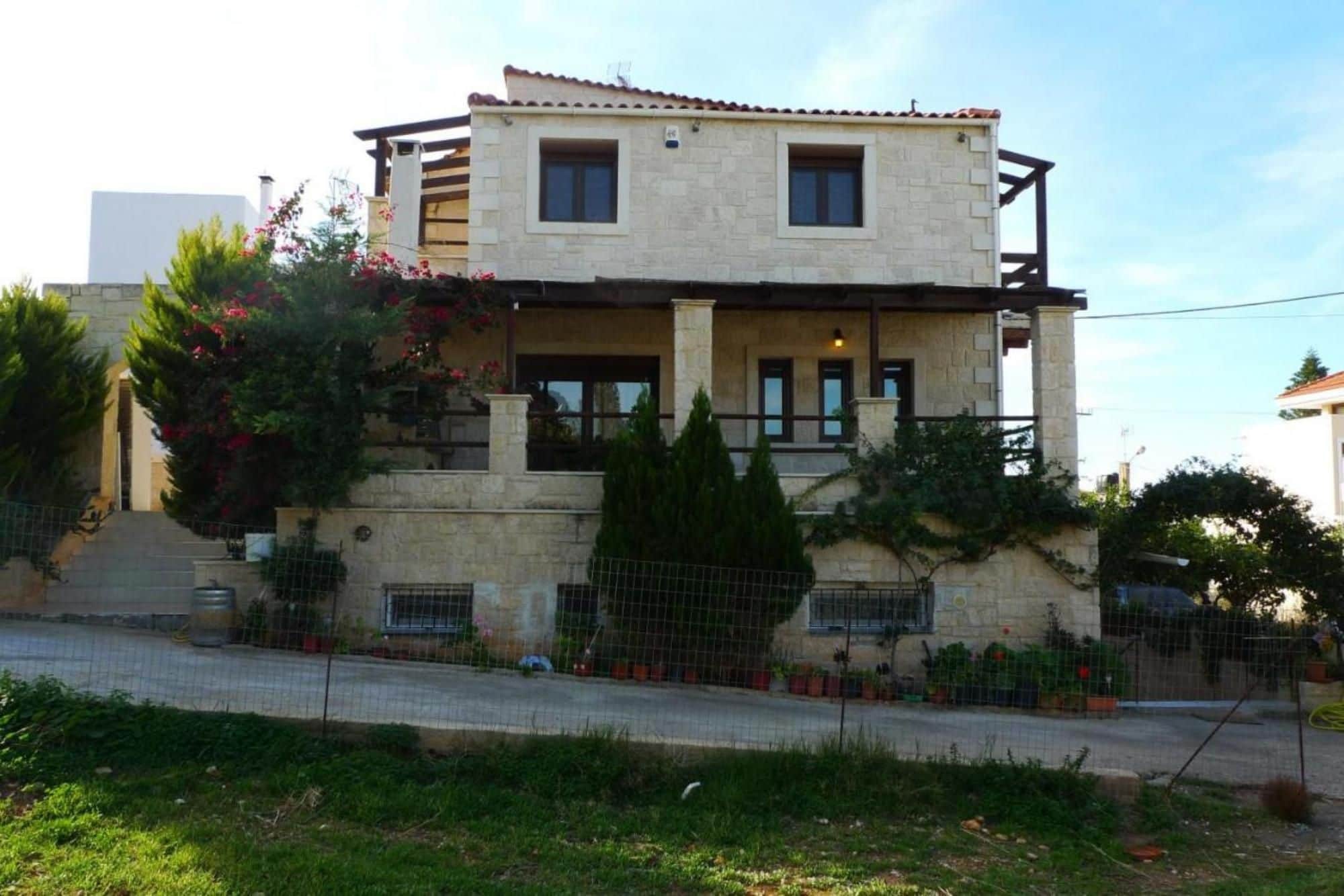 From €430
Heraklion
Stone and Wood Villa
10 guests · 4 bedrooms
View villa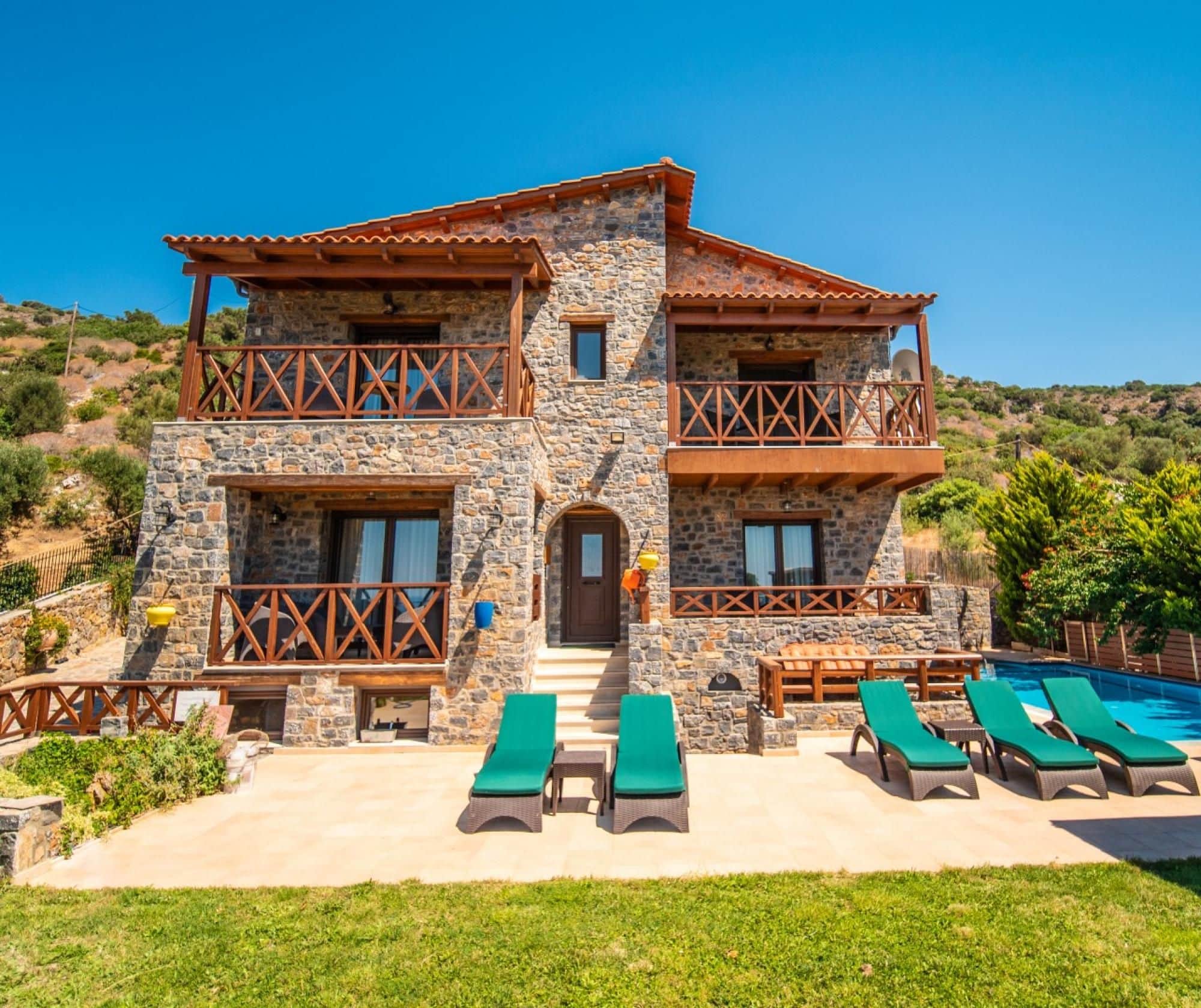 From €570
Milatos, Lasithi
Villa Avia
12 guests · 5 bedrooms
View villa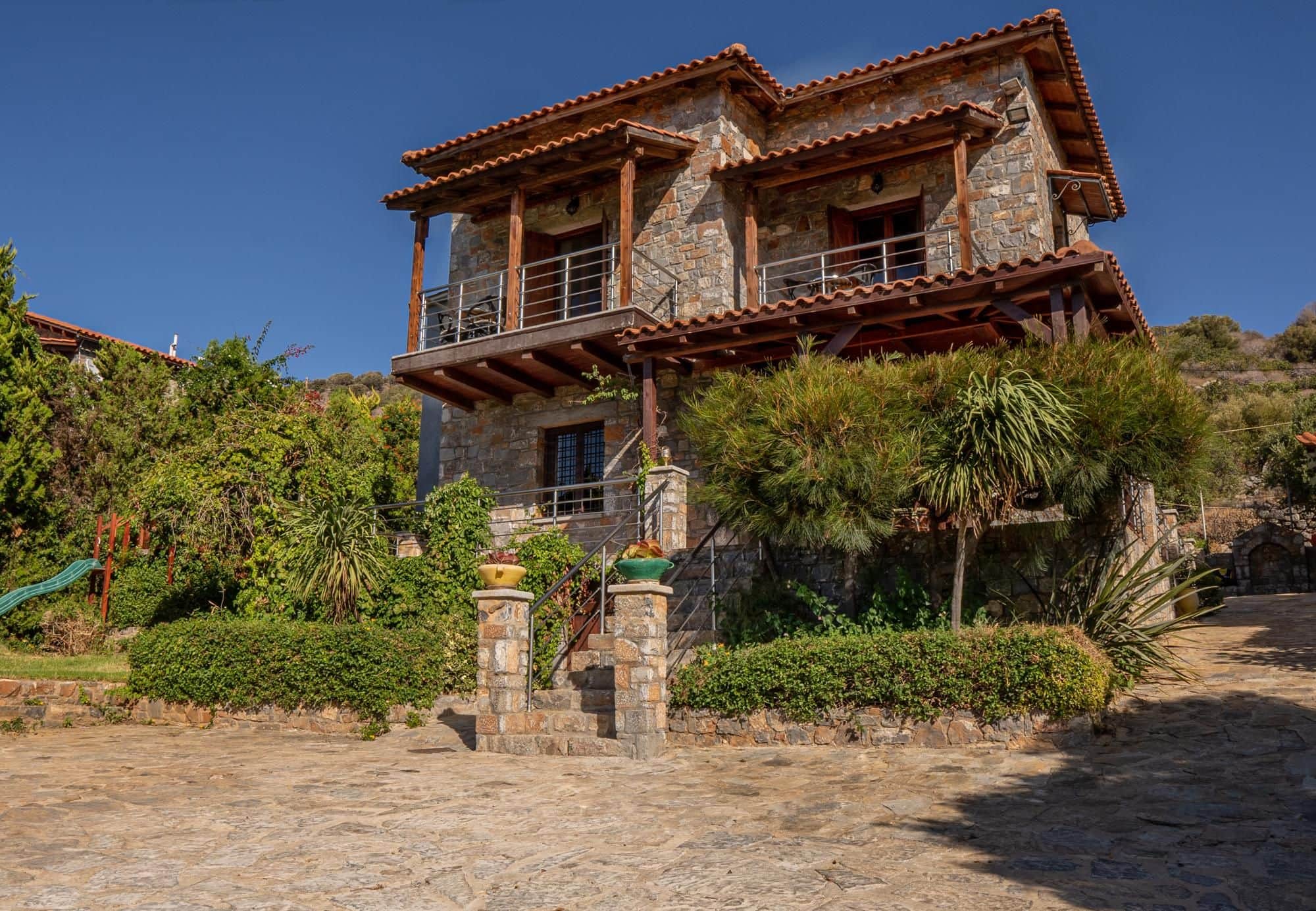 From €450
Lasithi
Iris Stone Built Villa
9 guests · 3 bedrooms
View villa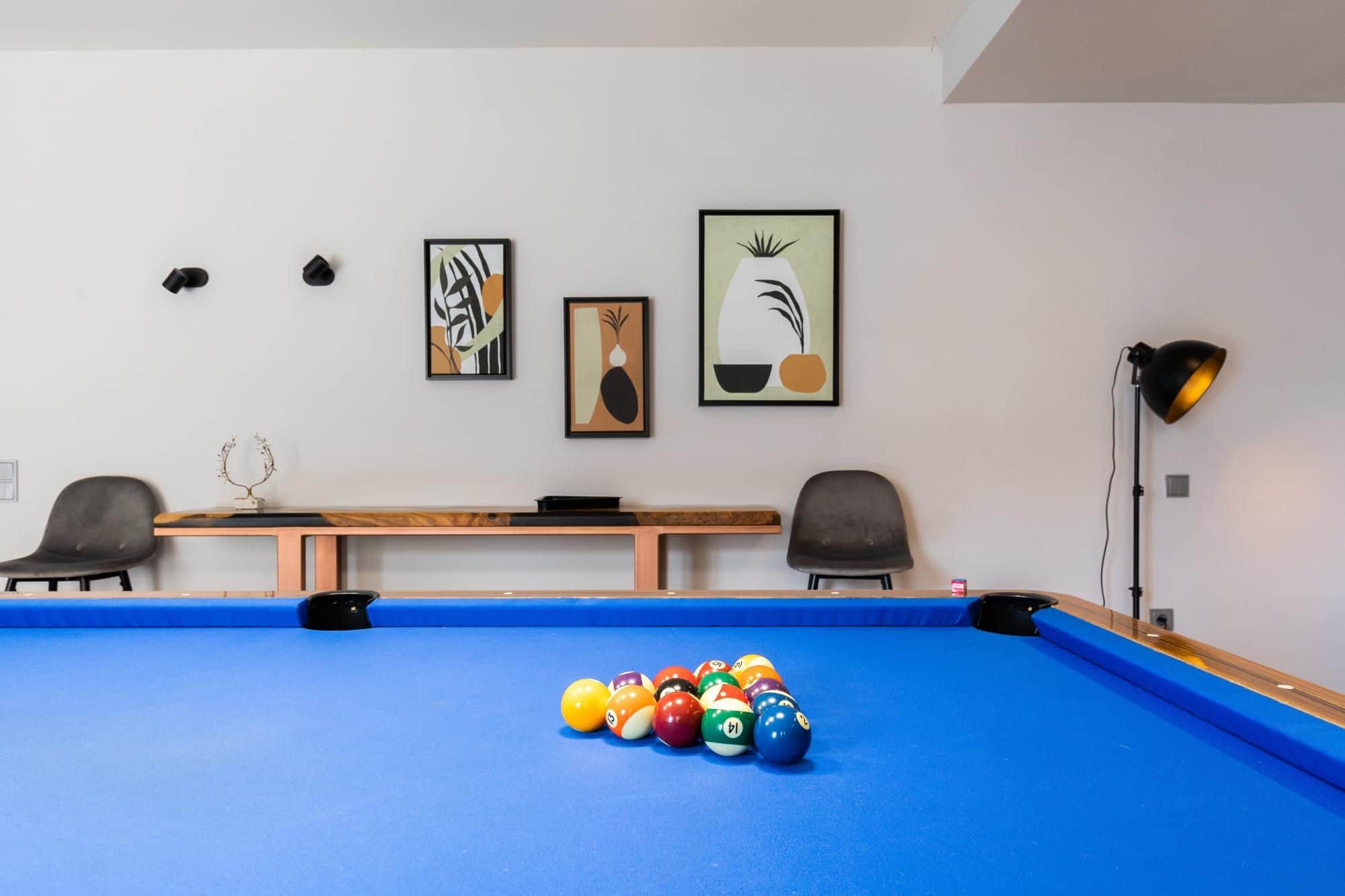 From €560
Lasithi
Blue Horizon Villa
10 guests · 4 bedrooms
View villaMotor yacht or sailing yacht: frequently asked questions
Is a motor yacht faster to Dia Island than a sailing yacht?
Yes. Our motor yacht listing describes a twenty-minute crossing to Dia, while a sailing boat takes thirty to forty-five minutes over the same water. The gain shows up as extra time anchored rather than a much shorter day.
Which is cheaper, a motor yacht or a sailing yacht?
Sailing, per hour on the water. The smallest private sailing charter we list is €470 for four hours, about €120 an hour, against €200 to €270 an hour for the motor yachts. Both are whole-boat prices.
How many people do these boats take?
The three Heraklion motor yachts take up to eleven guests each. The private sailing boats to Dia take eight or ten depending on the hull, and the skippered speedboat from Rodia Marina takes five.
Is fuel included?
On every skippered boat we list, engine or sail, yes. On a licence-free boat you drive yourself it is not — fuel is settled at the end on actual consumption.
Do I need any sailing experience?
No. Every boat on this page is skippered by a professional. Experience only becomes a question if you rent a licence-free boat and drive it yourself.
What is the cheapest way onto a private engine boat?
The skippered speedboat from Marina Rodias at €120 for the first hour, then €70 for each additional hour, for up to five guests with fuel included. Three hours works out at €260.
Final Thoughts
The engine-versus-sail question sounds like a matter of taste and is mostly a matter of arithmetic. An engine converts crossing time into swimming time, and you pay for that conversion at roughly twice the hourly rate. A sail gives you more hours afloat for the same money and asks you to spend some of them getting there.
So the useful question is not which hull is nicer. It is how much of your day you are willing to give to the crossing — and if the answer is none of it, whether you needed the whole boat at all.
Browse experiences in CreteExperiences you can book now
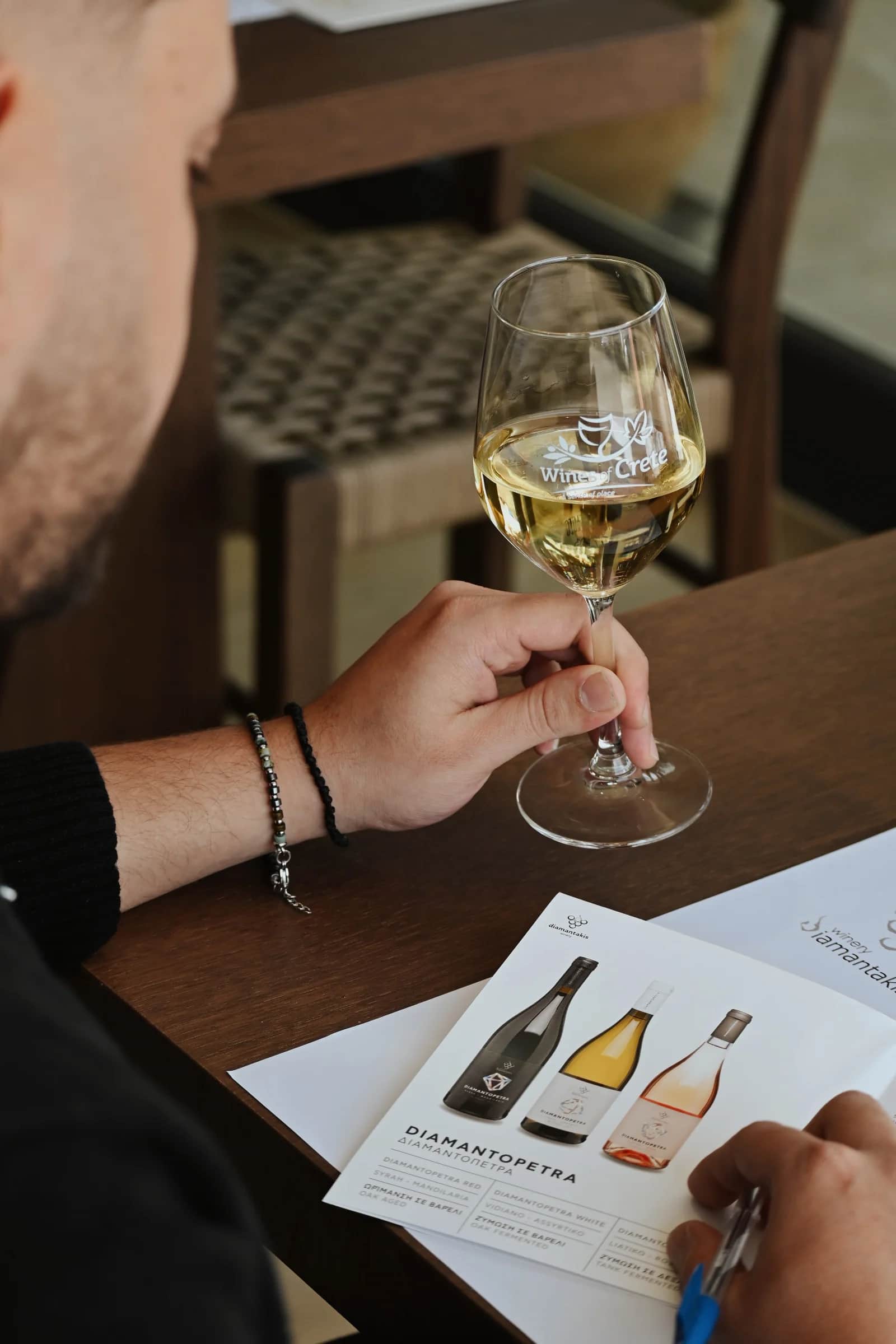 From €15
Heraklion, Crete · 1 hours
Tasting of 5 typical Cretan wines in Heraklion
Check availability From €15
Chania, Crete · 1 hours
Water Mill Cultural Tour & Tasting of local flavors in Chania, Crete
Check availability From €19
Heraklion, Crete · 1 hours
Cretan Wine Tasting near Heraklion
Check availability From €20
Chania, Crete · 1 hours
Small Premium Wine Tasting in Kolymvari, Chania
Check availability From €22
Heraklion, Crete · 1 hours